Utah County Plumbing
Water Heater Installed
or Replaced Right
by a Licensed Master Plumber.
Fast, code-compliant water heater installation and repair for every make and model. No pushy upsells, just the honest recommendation for your home.
What you get
The Outcome You Actually Wanted.
- Hot water back the same day whenever possible
- A properly sized unit that lasts, sized for your household's real usage
- Installation that meets Utah code and manufacturer warranty requirements
What's included
Full Scope, No Surprises.
- Gas and electric tank water heater installation
- Tankless water heater installation and service
- Leak diagnosis, thermostat and element replacement
- Anode rod replacement and preventive maintenance
- Expansion tanks, T&P valves, and shutoffs brought to code
How it works
A Simple, Honest Process.
Honest assessment
Mike looks at your current unit and usage before recommending anything. Sometimes a repair beats a replacement.
Straight recommendation
You'll get the pros and cons of tank vs. tankless for your specific home and budget.
Clean installation
Old unit hauled away, new unit installed to code, area cleaned up.
Walkthrough
Mike shows you the shutoffs, warranty info, and what to watch for over the next year.
What a Failing Water Heater Looks Like
A water heater rarely quits without warning. It gets worse in ways that are easy to explain away. Showers that used to stay hot start going lukewarm before you are finished. The hot water runs out sooner than it did a year ago, even though nothing about your household changed. You hear rumbling or popping from the tank when it heats. The hot water comes out with a rusty tint. There is dampness, rust, or a small puddle around the base of the unit.
Most of those symptoms trace back to the same thing. Minerals in the water settle to the bottom of the tank and build into a hard layer of sediment. The burner is underneath, so it now has to heat through that layer before it heats the water, which is what makes the unit run longer for less hot water. The popping sound is water trapped under the sediment boiling and pushing through. Rusty water and moisture at the base are different and more serious, because they point at the tank itself corroding rather than just collecting buildup.
The distinction that matters to you is whether the problem is a part or the tank. Parts fail and get replaced. A tank that has rusted through is done, and no repair changes that. That is the first thing worth sorting out, and it is the first thing Mike looks at.
How the Job Gets Done
Mike looks at your existing unit and how your household actually uses hot water before recommending anything. Sometimes a repair is the right call and a replacement would be a waste of your money. A thermostat, a heating element, or a leaking connection are all fixable. Sediment can be flushed. An anode rod can be replaced, which is a metal rod that sits inside the tank and corrodes on purpose so the tank walls do not. When that rod is used up, the tank starts corroding instead, and swapping it out is far cheaper than replacing a heater. If the tank is already leaking from the tank body, replacement is the only honest answer, and he will say so.
When it is a replacement, sizing comes before anything else, based on how many people are in the home and how often hot water gets used at the same time. You will get the real pros and cons of a tank compared to going tankless for your specific home, gas line, and budget, without a push toward whichever one costs more.
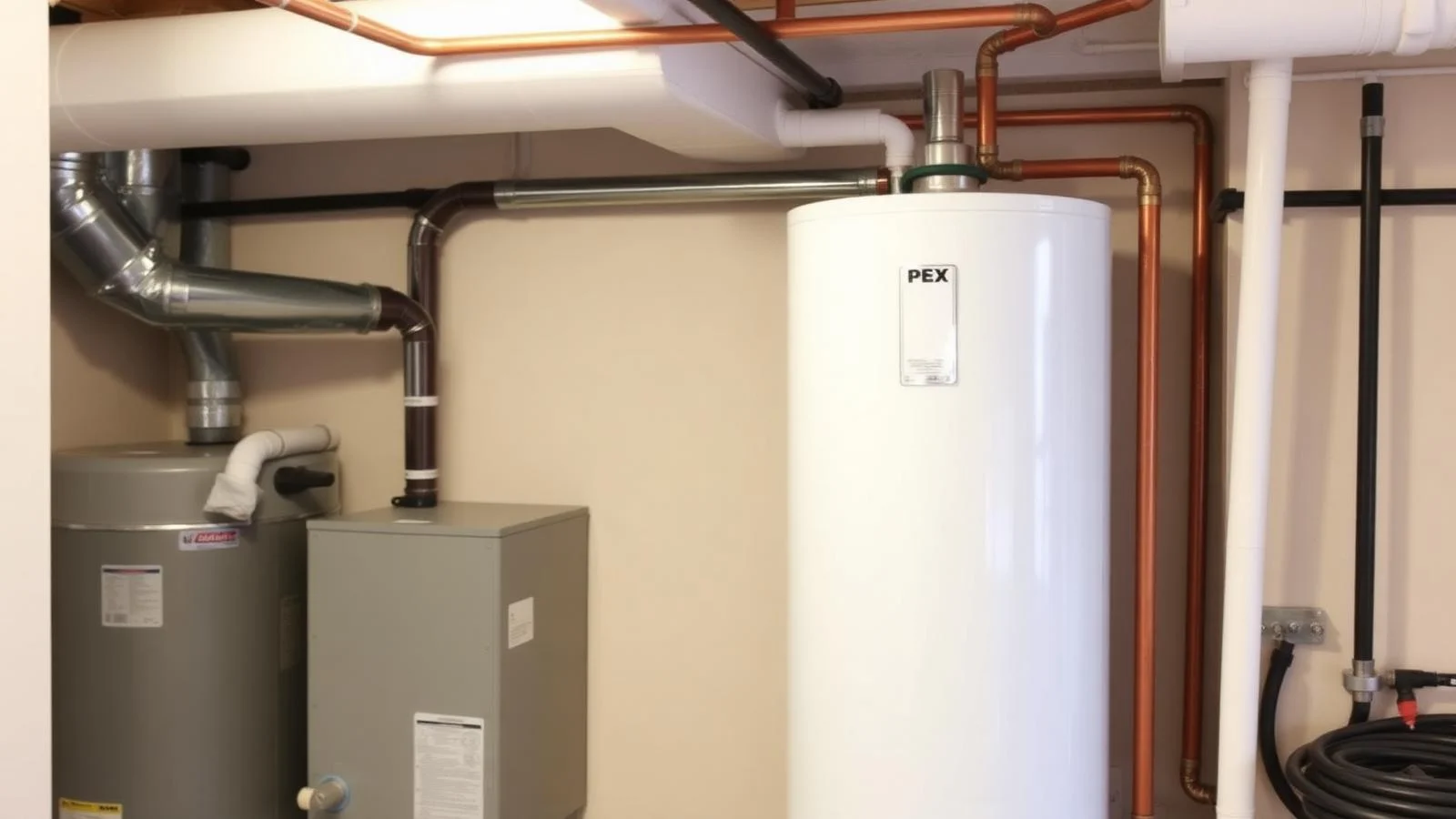
The install itself covers more than setting a new unit in place. The old heater gets hauled away. A few related pieces get brought up to code while the water is off, because that is the only sensible time to do it. An expansion tank is a small tank that gives heated water somewhere to go as it expands, which keeps pressure from building against your pipes and fixtures. The T and P valve, short for temperature and pressure, is the safety valve that opens to release pressure if the tank ever gets too hot or too pressurized. Shutoffs are the valves that let you cut water to the heater without shutting off the whole house. Those parts are also what manufacturer warranties expect to see installed correctly.
Last is the walkthrough. Mike shows you where the shutoffs are, hands over the warranty and registration details for the unit, and tells you what to watch for over the first year.
What Is Included
Gas and electric tank water heater installation, tankless installation and service, and repair work on the unit you already have, including leak diagnosis and thermostat and element replacement.
Preventive work is part of it too, mainly anode rod replacement and flushing sediment before it costs you the tank. Expansion tanks, T and P valves, and shutoffs get brought to code as part of an install.
Hard water is worth mentioning here because it is the reason so many Utah County heaters fail early. Scale collects inside the unit and forces it to work harder, so a water softener is often the change that gets the most life out of whatever heater you install.
Signs It Is Time to Call
Hot water runs out faster than it used to.
Showers go lukewarm partway through.
Rumbling or popping coming from the tank.
Rusty or discolored hot water.
Moisture, rust, or puddling around the base.
The unit is past ten years old and acting differently.
No hot water at all.
Common Questions.
How long does a water heater last?
A standard tank lasts 8-12 years. Tankless units routinely go 20+ years with basic maintenance. Hard water shortens both, because scale collects inside the unit and makes it work harder, so a water softener helps your heater reach the top of that range.
Should I go tankless?
Sometimes yes, sometimes no. Mike will give you a straight answer based on your household's hot water demand, gas line, and budget.
Can you come out today?
Same-day or next-day scheduling in most cases. Call or text and Mike will give you a real ETA.
Why is my water heater rumbling or popping?
That sound is almost always sediment. Minerals settle out of the water and build into a hard layer on the bottom of the tank, and water gets trapped underneath it. When the burner fires, that trapped water boils and pushes through the layer, which is the popping you hear. It also means the burner is heating through sediment instead of heating water, so the unit works harder than it should.
What decides what size water heater I need?
How many people live in the home and how often hot water gets used at the same time. A household that runs a shower while the dishwasher is going needs more capacity than one that does not. Mike goes through your actual usage before recommending a size, rather than matching whatever was there before.
Can a leaking water heater be repaired?
It depends on where the leak is. A leaking connection, valve, or fitting is a repair. A leak coming from the tank body itself means the steel has corroded through, and there is no repair for that, so replacement is the only honest answer. Mike will tell you which one you have before quoting anything.
What is an anode rod and why does it get replaced?
It is a metal rod that sits inside the tank and corrodes on purpose so the tank walls do not. It is doing its job by slowly being eaten away. Once it is used up, corrosion moves on to the tank itself, which is what eventually kills a water heater. Replacing the rod is far cheaper than replacing the unit, which is why it is worth doing.
Ready to Get It Fixed Right the First Time?
Call or text Mike directly. Free estimates, same-day scheduling when available, and no surprises on pricing.